

 Market Insights
Why Propane Anchors High-Temperature Firing
Propane occupies a sweet spot among kiln fuels. Its stoichiometric air-to-fuel ratio sits near 23.8 to 1 by volume, and when burned correctly it produces a hot, clean flame with an adiabatic stoichiometric temperature of roughly 1,980 degrees Celsius - comfortably above the 1,250 to 1,400 degree Celsius window where stoneware, porcelain, sanitaryware, and many technical ceramics reach maturity. Because the fuel arrives as a dense, storable liquid and burns as a precisely meterable gas, it gives operators pipeline-grade control without requiring a natural gas lateral running to the site.
That control extends to kiln atmosphere. Reduction firing - deliberately starving the flame of oxygen to pull oxygen out of glaze oxides and develop celadon blues, iron reds, and copper surfaces - demands burners that hold a stable fuel-rich ratio through the entire soak. Propane's consistent heating value makes those ratios repeatable in a way that heavier distillate fuels never were. Add a near-zero ash burden and manageable sulfur content, and the engineering case for propane becomes straightforward for most modern plants.
46 MJ/kgNet Heating Value
1,980 deg CStoichiometric Flame Temp
270 to 1Liquid-to-Vapor Expansion
23.8 to 1Air-to-Fuel Ratio by Volume
Fuel Quality Foundations: HD-5 and the Refining Trail
Not all propane behaves identically at the burner tip, and kiln operators notice the difference. Commercial propane originates on two paths. The first is recovery during cryogenic fractionation at natural gas processing plants, where mixed natural gas liquids are separated into ethane, propane, and butane cuts. The second is production inside refineries, where propane emerges as a byproduct stream from cracking and reforming units. Gas-plant propane tends toward cleaner hydrocarbon purity; refinery streams carry a higher share of olefins such as propylene.
The industry answer is the HD-5 specification (ASTM D1835 / GPA 2140), which caps propylene at 5.0 volume percent and tightens volatility limits so the fuel performs consistently across climates. After treatment - dehydration to remove moisture that would otherwise freeze in regulator seats and valves, and sweetening to strip corrosive sulfur compounds - the product is re-odorized with ethyl mercaptan at roughly 1 pound per 10,000 gallons so leaks become detectable far below hazardous concentrations.
| Parameter | Contractual Limit | Verification Basis |
|---|---|---|
| Total propane plus propylene | Minimum 95.0 vol % | Gas chromatography (ASTM D2163) |
| Propylene content | Maximum 5.0 vol % | Gas chromatography (ASTM D2163) |
| Butanes and heavier | Maximum 2.5 vol % | Gas chromatography (ASTM D2163) |
| Pentanes and heavier | Maximum 0.05 vol % | Gas chromatography (ASTM D2163) |
| Vapor pressure at 37.8 deg C | Maximum 208 psig (approx. 1,434 kPa) | ASTM D1267 |
| Moisture | Free of water and hydrates | Visual and dew point checks |
| Copper strip corrosion | No. 1 strip or better | ASTM D1838 |
| Odorization | Detectable at one-fifth of the lower explosive limit | NFPA 58 field verification |
Why does a ceramist care? Because burner systems tuned for a given heating value and gas density drift when fuel composition shifts. Consistent HD-5 supply keeps air-to-fuel ratios, reduction atmospheres, and fuel-cost-per-fired-piece models stable month after month - which is exactly what RK Petro guarantees across every contracted parcel.
Anatomy of a Resilient Bulk Supply Architecture
Primary Liquid Storage
Serious kiln operations do not run on ad-hoc bobtail deliveries. The backbone is fixed liquid storage: ASME-coded pressure vessels ranging from 12,000-gallon satellite tanks to mounded installations exceeding 60,000 gallons, buried or berthed to moderate thermal swings and reduce NFPA 58 setback distances. Best practice pairs at least two vessels so inspection and recertification events never take the entire reserve offline. Core protective features include:
- Cathodic protection on underground and mounded steel, monitored quarterly
- Excess-flow valves on liquid lines and hydrostatic relief valves on all liquid-filled segments
- Relief valves sized for fire exposure, plus vapor return connections for unloading operations
- Remote shutoffs integrated into the kiln control room safety logic
- Level instrumentation - float, magnetostrictive, or radar - tied to telemetry for automatic reorder triggers
Vaporization and Pressure Regulation
Liquid propane boils at -42 degrees Celsius at atmospheric pressure, but a plant pulling hundreds of kilograms per hour cannot rely on tank vaporization alone once wetted surface area and ambient temperature fall away in winter. Dedicated vaporizers bridge the gap. Direct-fired units respond quickly but bring their own fuel draw and siting complexity; water-bath units heated by recirculating hot water or electric elements deliver steadier outlet temperatures and gentler thermal cycling. Sizing convention targets at least 125 percent of calculated peak-hour demand, with N+1 redundancy on larger sites.
Downstream, staged regulation drops vessel pressure - which can climb toward 200 psig on a hot afternoon - to stable working levels. A typical architecture holds an intermediate header anywhere from 5 to 25 psig depending on burner class, then trims each burner train individually for its firing zone. Line heaters installed ahead of regulators prevent cold-weather condensation and regulator icing.
Distribution, Metering, and Burner Interface
From the yard, a looped header feeds the kilns through zoned isolation so upstream maintenance never idles downstream firing. Flow metering at each branch converts fuel into cost-per-piece data and supports emissions reporting. At the kiln itself, high-velocity nozzle-mix burners provide the turbulence needed for uniform heat work, while recuperative designs route exhaust through a heat exchanger to preheat combustion air - often cutting fuel consumption by 20 to 30 percent versus cold-air firing on tunnel and roller-hearth equipment. For reduction work, the same trains modulate into fuel-rich ratios under PLC supervision, holding atmosphere setpoints through body-reduction and soak phases.
Sizing the Architecture Against Real Demand Curves
Nameplate burner ratings mislead. Proper architecture starts with a demand model: sum connected burner capacities, apply a measured simultaneity factor reflecting how many zones actually fire together, convert to kilograms per hour, and overlay the worst-case winter day. Then interrogate the liquid side - tank turnover cycles, refill cadence, and vaporization capacity under cold-soak conditions - rather than assuming summer behavior holds in January.
Consider a worked example: a plant operating a 20-cubic-meter shuttle kiln peaking at 250 kg/hr alongside a continuous tunnel drawing 600 kg/hr. Combined worst-case load approaches 850 kg/hr - roughly 40 gigajoules per hour - implying about 20 tonnes of propane per day at full production. Thirty days of cover means approximately 600 tonnes in storage, or about 1,200 cubic meters of liquid at propane's 510 kg/m3 density: a textbook case for twin mounded tanks served by dedicated vaporization skids.
| Kiln Class | Peak Firing Temp | Operating Pattern | Indicative Peak Draw |
|---|---|---|---|
| Studio shuttle, 2-4 m3 | 1,260 deg C | Batch, 12-16 hr cycles | 40-80 kg/hr |
| Car-bottom shuttle, 15-30 m3 | 1,320 deg C | Batch, 30-48 hr cycles | 150-350 kg/hr |
| Tunnel kiln, sanitaryware | 1,250-1,380 deg C | Continuous | 400-1,000 kg/hr |
| Roller-hearth fast-fire tile line | 1,150-1,220 deg C | Continuous, 45-90 min residence | 600-1,400 kg/hr |
Design Rule: Plan for the January Night
Cold-soak vaporization limits, simultaneous firing of preheat and soaking zones, and a delivery delayed by fog are what break undersized systems - not average annual throughput. Size storage, vaporization, and contract volumes to the worst realistic week, then verify with twelve months of metered data.
Global Trade Realities: How Propane Reaches Your Gate
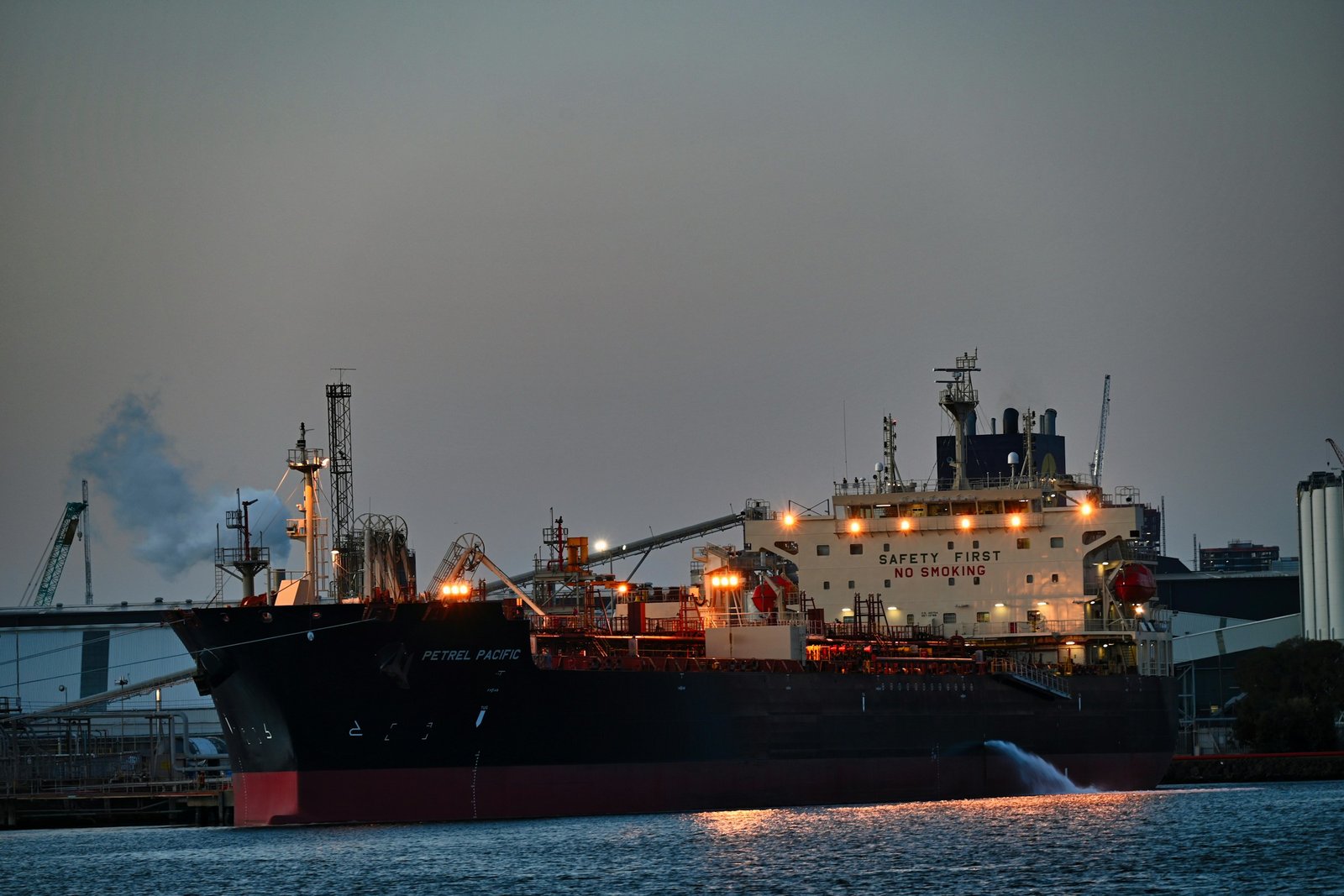
Every kilogram in your tank began as a cargo somewhere else. The United States Gulf Coast has become the dominant export hub, shipping well over 1.5 million barrels per day of LPG, alongside major flows from Western Canada, the North Sea, Algeria, and the Persian Gulf. Fully refrigerated VLGCs of roughly 84,000 cubic meters move cargoes of about 44,000 tonnes between trading hubs, while pressurized regional parcels feed inland distribution networks closer to end users.
Price discovery runs through benchmark centers: Mont Belvieu and Conway in North America, the Saudi Aramco Contract Price for Middle East term deals, and the Argus Far East Index across Asia. Most industrial supply contracts reference these markers plus a negotiated premium covering freight, storage, and handling - meaning delivered cost moves with markets an operator may never see directly.
Physical friction points worth building into every supply plan:
- Panama Canal transit and draft restrictions during drought years, stretching delivery loops to the U.S. East Coast and beyond
- Red Sea security diversions pushing Gulf-origin cargoes around the Cape of Good Hope, adding 10 to 14 days of voyage time
- Loading terminal queues and berth congestion at export hubs during seasonal demand spikes
- Freight rate volatility that can swing delivered premiums faster than feedstock prices themselves
- Custody-transfer quality disputes, mitigated by independent cargo inspection through firms such as SGS or Bureau Veritas
Risk Management: The Redundancy Checklist
Kiln-critical fuel supply deserves the same rigor applied to the kiln itself. Before signing any long-term agreement, confirm the following layers exist:
- Two or more storage vessels, so inspection windows never zero out site inventory
- N+1 vaporization capacity with automatic changeover on equipment faults
- Dual-source supply agreements spanning different origin basins and trade routes
- Telemetry-driven reorder points set above realistic weather-delay buffers
- A documented emergency protocol covering curtailment priorities, portable vaporizer availability, and standby truck coverage
Supply Chain Note
Single-origin contracts look cheaper until a canal closes or a terminal queue forms. Blended multi-origin programs cost marginally more per tonne and reliably deliver when the firing schedule cannot slip.
Procurement Strategy and the RK Petro Trading Desk
Engineering the hardware is half the architecture; contracting the molecules is the other half. RK Petro operates a global LPG trading desk that matches kiln operators with physical HD-5 supply drawn from multiple origin basins, structured against the index you prefer - fixed-price forwards for budget certainty, or index-linked formulas that capture market lows. Deliveries run on telemetry-scheduled replenishment, so tanks turn without a single phone call.
- Multi-origin HD-5 supply with cargo-quality certificates available on request
- Delivered-to-site pricing inclusive of freight, demurrage, and handling
- Technical review of your storage, vaporization, and regulation design before contract award
- Flexible parcel sizes, from road-tanker lots to scheduled shiploads for coastal facilities
- Seasonal forward cover to lock winter volumes before peak premiums build
Request a quote and speak with our trading desk
Whether you are commissioning a new tunnel-kiln line or retrofitting aging shuttle capacity, treat the fuel system as part of the kiln itself. Designed properly, it disappears from the risk register - and the fire does exactly what the firing curve says it should.

Discussion (0)
Comments are moderated — they appear after a quick review by our team.
Leave a Comment