

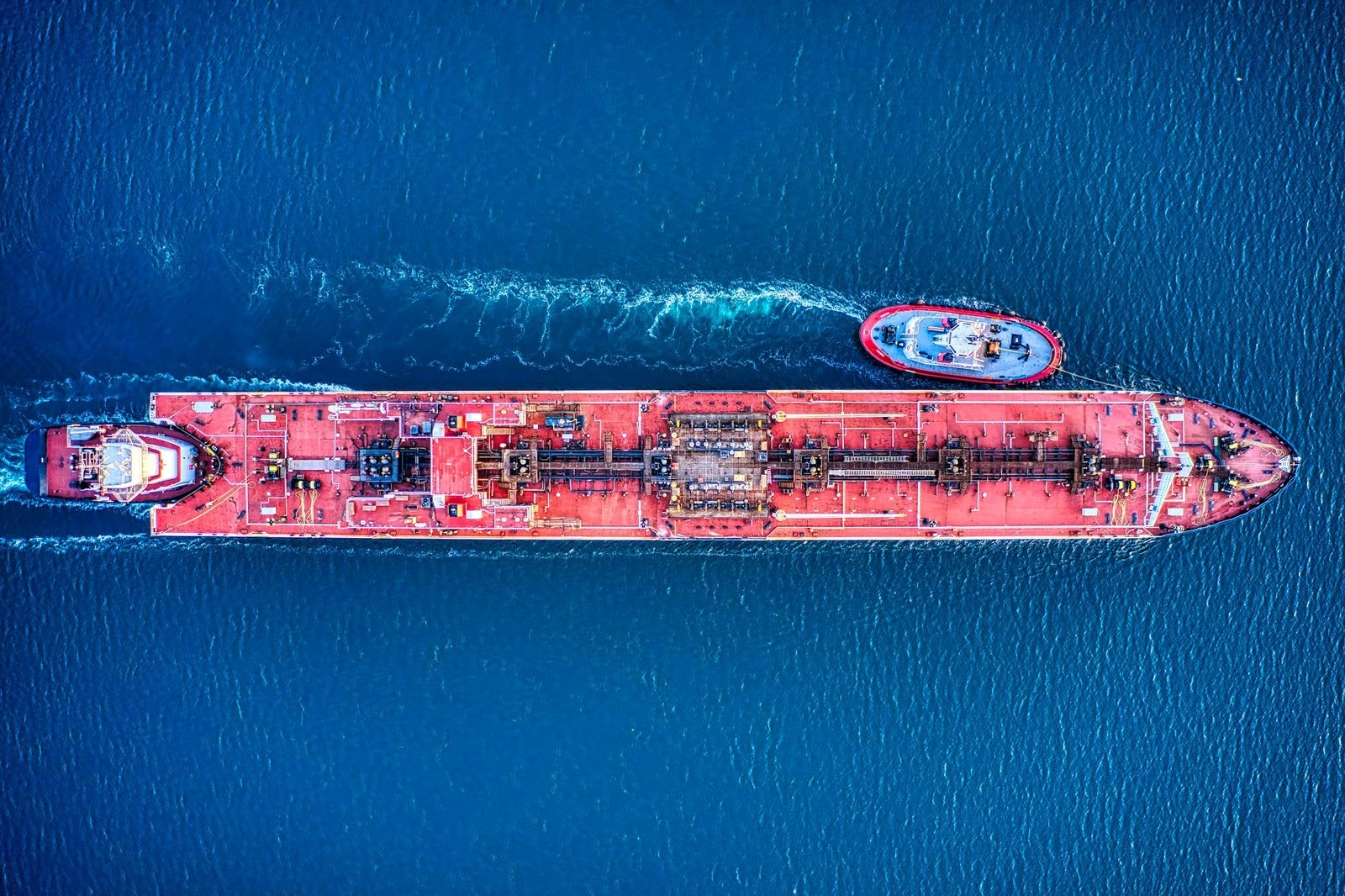
 Market Insights
Every cargo of crude oil, refined product, petrochemical feedstock, or liquefied gas that crosses an ocean is, at its core, a moving bank account worth millions of dollars. The difference between a voyage that settles cleanly and one that collapses into a months-long dispute often comes down to a handful of millimeters on a tank gauge and a fraction of a degree Celsius on a thermometer. Automated cargo monitoring - the continuous, electronic, real-time measurement of liquid level, cargo temperature, and tank or pipeline pressure - has therefore evolved from a terminal convenience into a contractual and commercial necessity for serious traders, charterers, refiners, and terminal operators.
Why Continuous Monitoring Decides Cargo Value
In traditional practice, cargo quantities were established by manual sounding: a crew member lowered a weighted tape through an open hatch, read the ullage by eye, drew a bucket sample, and hoped the sea stayed calm. Manual methods introduce human variance, expose personnel to toxic hydrocarbon vapors, and - most damaging of all - leave gaps in the record precisely when post-discharge disagreements arise.
Modern automated systems close those gaps permanently. High-accuracy level gauges log ullage readings every few seconds; multi-point temperature elements capture the thermal profile of the entire cargo column rather than a single spot reading; and pressure transmitters verify that inert gas blankets, vapor recovery lines, and pressurized cargo systems remain within both safety limits and contractual parameters. The result is a continuous, timestamped evidentiary record that follows the cargo from load port to discharge port and can be produced instantly if a counterparty, insurer, or arbitrator asks questions.
+/- 1 mm
Repeatability of servo tank gauges approved for custody transfer duty
0.2 - 0.5%
Typical in-transit volume variation on long-haul crude and product voyages
$40,000+
Per-day demurrage exposure for a mid-size product tanker in tight markets
15 deg C
Global reference temperature to which all traded volumes must be corrected
The Three Pillars of Automated Tank Measurement
A complete cargo monitoring architecture stands on three measurement pillars. Remove any one of them and the quantity calculation, the safety case, or the quality record fails.
Pillar One: Level Gauging
Liquid level is the foundation of every quantity calculation. Non-contact 26 GHz radar gauges using frequency-modulated continuous wave (FMCW) technology measure the time-of-flight of microwave pulses reflected off the liquid surface. Because they never touch the cargo, they are immune to density swings, viscosity, coating buildup, and foam - making them ideal for crude, dirty products, and chemical parcel tanks alike. Servo tank gauges, which wind a calibrated measuring wire and displacer onto a precision drum, deliver even tighter performance and are widely approved for fiscal and custody-transfer service at refineries and export terminals. In pressurized spheres, mounded bullets, and fully refrigerated LPG carriers where radar cannot operate, differential-pressure (hydrostatic) transmitters infer level from the head of liquid acting on a diaphragm.
Critically, all of this hardware is installed through closed gauging wells and vapor-tight fittings. Closed gauging keeps crews away from benzene, H2S, and volatile organic vapors while satisfying MARPOL Annex II handling requirements for noxious liquid substances.
Pillar Two: Temperature Gauging
A volume number means nothing until it is tied to a temperature. A typical crude oil changes volume by roughly 0.07 percent for every single degree Celsius of temperature change - which means a 300,000-barrel cargo drifting three degrees from its assumed temperature can distort a shipment by more than 600 barrels. Modern installations use multi-point resistance temperature detector (RTD) arrays suspended along the full depth of the tank, sampling the column at fixed intervals so that the arithmetic average temperature reflects reality rather than stratification near heating coils.
Temperature automation also protects quality. Heavy fuel oil parcels are typically discharged between 45 and 55 degrees Celsius to keep viscosity manageable; bitumen may be held near 150 degrees Celsius; and waxy crudes must stay well above their pour point to prevent wax precipitation on tank walls. Continuous thermal visibility lets operators adjust heating ahead of problems instead of reacting to them at the discharge manifold.
Pillar Three: Pressure Gauging
Pressure is the pillar that guards both safety and cargo integrity. On conventional product and crude tankers, transmitters continuously confirm that the inert gas blanket holds a slight positive pressure - commonly a few tens of millibars - so that neither air ingress creates an explosive mixture nor excess pressure burdens the structure. Overfill and underpressure protection schemes aligned with recognized engineering guidance rely directly on these signals.
On liquefied gas carriers, pressure monitoring becomes a direct window into the cargo itself: saturated vapor pressure reveals boil-off behavior, confirms whether cargo conditioning is holding, and warns of approaching relief valve set points. Combined with level data, differential-pressure measurements also allow density profiling inside pressurized vessels - information that manual methods simply cannot obtain safely.
Choosing the Right Instrumentation: A Practical Comparison
No single technology fits every vessel, tank farm, or cargo slate. The table below summarizes the mainstream options and where each earns its keep.
| Technology | Typical Accuracy | Best-Fit Applications | Key Considerations |
|---|---|---|---|
| Non-contact radar (FMCW) | +/- 2 mm | Crude and product tankers, floating storage, terminal tank farms | Immune to density and viscosity; requires clean antenna and stable surface conditions |
| Servo tank gauge | +/- 1 mm | Fiscal metering at refineries, export terminals, custody transfer | Highest accuracy class; mechanical assembly needs scheduled maintenance |
| Guided-wave radar | +/- 2 to 3 mm | Narrow tanks, low-dielectric solvents and chemicals | Probe must match tank internals; excellent for turbulent or foaming service |
| Hydrostatic / differential pressure | 0.05 - 0.10% of span | Pressurized spheres, mounded bullets, refrigerated LPG and LNG | Density-dependent; pairs naturally with temperature inputs for mass conversion |
| Float and tape ATG | +/- 4 mm | Legacy storage service and secondary verification | Moving parts subject to wear; increasingly replaced by radar retrofits |
The same logic applies to supporting instruments. Marine-grade pressure transmitters are specified for hazardous-area certification and wide ambient envelopes, while temperature systems combine multi-point averages with independent spot sensors so that a single element failure can never invalidate a cargo figure.
From Sensor to Settlement: Data Integration and Custody Transfer
Raw sensor output becomes money only after correction. Traded volumes are converted from observed conditions to standard conditions using published correction procedures, principally the API Manual of Petroleum Measurement Standards Chapter 11.1 and its joint ASTM implementation. The workflow looks like this:
- Gauge the level automatically, apply tank capacity table interpolation, trim, and list corrections, then deduct free water detected at the tank bottom.
- Apply the average cargo temperature from the multi-point array to derive the volume correction factor.
- Correct for pressure where cargoes are handled above their saturated vapor pressure, using the appropriate compressibility treatment.
- Combine with laboratory density determined by oscillating U-tube or hydrometer methods to convert standard volume into weight in air or vacuum - the basis on which most international trades actually settle.
The core settlement equation:
Standard Volume = Observed Volume x VCF (temperature) x CPL (pressure)Every digit in this chain originates from an automated gauge. If the gauges drift, the invoice drifts with them.
Integration is what turns measurement into management. Field transmitters communicate over HART and FOUNDATION fieldbus into tank-side junction boxes, then upward through Modbus TCP or OPC interfaces into the ship or terminal SCADA layer. On vessels at sea, redundant telemetry links and satellite IoT gateways push time-stamped gauge data ashore, giving traders and operations desks live visibility without waiting for noon reports. Because every reading carries a timestamp and device health flag, the resulting archive doubles as an audit trail: when a dispute surfaces weeks later, both sides interrogate identical machine-generated evidence rather than competing handwritten logs.
Solving Global Trade Challenges With Automation
The commercial friction in international oil logistics concentrates in a few recurring pain points, and automated monitoring addresses each one directly:
- Vessel-to-shore discrepancies. Most contracts tolerate roughly 0.5 percent difference between ship and shore figures before claims procedures activate. Continuous gauging narrows that gap dramatically by eliminating reading errors, missed trim corrections, and inconsistent sounding techniques between ports.
- Vessel Experience Factor (VEF) credibility. A vessel's historical ship-versus-shore ratio is only as good as its underlying records. Automated archives give owners defensible, granular VEF documentation that speeds up negotiations and dispute resolution.
- Multi-port discharge complexity. When one parcel splits across two or three discharge ports, part-cargo accounting gets messy fast. Live level and temperature tracking at each stage separates genuine physical loss from legitimate operational transfers and pumping residuals.
- Sea-state distortion. Swell and ship motion wreck manual soundings; radar and servo gauges filter surface disturbance electronically and report steady values regardless of weather windows.
- Demurrage exposure. Accurate, timestamped readiness and completion records support honest laytime calculations, protecting both charterers and owners from padded or disputed timing claims.
- Quality preservation. Thermal and pressure trends catch heating failures, inert gas losses, and leak indications hours before they become off-spec cargoes or pollution incidents.
Rule of thumb: on a 90,000-tonne clean product parcel, a sustained measurement bias of just 0.1 percent represents roughly 90 tonnes of unresolved exposure per voyage. At current freight and product values, that single point of accuracy pays for a full automated gauging retrofit several times over.
Implementation Best Practices
Hardware alone does not create reliable measurement. Operators who get lasting value from automated cargo monitoring follow a disciplined deployment pattern:
- Specify instruments with ATEX or IECEx certification appropriate to the zone classification, and insist on closed gauging arrangements for all toxic and volatile services.
- Establish scheduled calibration and proving routines against traceable references, with drift alarms that flag gauges trending out of tolerance before they affect a lifting.
- Build in redundancy: two independent level measurements per critical tank, cross-checked automatically, with voting logic that alerts rather than silently averages disagreement.
- Rationalize alarm philosophy so that high-high level, low-low pressure, and rapid-change alerts reach the bridge and control room without flooding operators with noise.
- Treat connectivity as a cybersecurity surface: segment OT networks from business IT, encrypt telemetry, and require authenticated access to any gateway that touches measurement data.
- Train crews on manual backup procedures, because the best automated system still needs competent human fallback during power loss or sensor failure.
RK Petro: Transparency Engineered Into Every Barrel
At RK Petro, we treat measurement infrastructure as a competitive advantage rather than a compliance expense. Across the storage terminals, vessel charters, and trading programs we manage, automated level, temperature, and pressure monitoring is specified from day one, integrated into our digital reporting stack, and shared transparently with counterparties. Our clients see the same gauge data our operations teams see - which means faster closings, cleaner settlements, and fewer surprises at the discharge port. As volumes move through tighter markets and stricter scrutiny, that level of engineered transparency is what separates dependable energy partners from everyone else.
Ready to De-Risk Your Next Cargo?
Talk to our team about monitored storage, verified loading operations, and transparent cargo documentation for your next lifting.
Request a quote and speak with our trading desk

Discussion (0)
Comments are moderated — they appear after a quick review by our team.
Leave a Comment