

Why ULSD Procurement Deserves Board-Level Attention
For commercial fleet operators, ultra-low sulfur diesel (ULSD) is not merely a consumable - it is the single largest controllable line item on the balance sheet. Depending on route profile, payload, and equipment age, fuel routinely accounts for 30 to 40 percent of total fleet operating cost, which means a disciplined procurement strategy can swing annual profitability by six figures before a single new truck is purchased.
Yet most fleets treat buying diesel the way they buy office supplies: reactive, spot-driven, and disconnected from market intelligence. That posture was survivable in stable markets. It is untenable today, when a single geopolitical disruption can move cargo premiums by tens of dollars per metric ton in a week. Optimizing ULSD procurement requires understanding three layers simultaneously: the product itself, the global machinery that moves it, and the financial architecture of your supply contracts.
Know Your Product: The Specifications That Move Markets
ULSD is legally mandated across virtually every developed economy because sulfur devastates modern aftertreatment systems. Sulfur oxides poison the catalytic coatings in diesel oxidation catalysts and permanently foul diesel particulate filters, so regulators capped sulfur content at 15 parts per million (ppm) in North America under ASTM D975 grade S15, and at 10 ppm in Europe and much of Asia under EN 590. If you operate SCR-equipped trucks running DEF, every drop you burn must meet those ceilings - there is no grace margin.
But sulfur is only one parameter. Sophisticated buyers evaluate the full certificate of analysis:
| Parameter | ASTM D975 (Grade 2-D, S15) | EN 590 | Why It Matters to Your Fleet |
|---|---|---|---|
| Sulfur content | Max 15 mg/kg | Max 10 mg/kg | Protects DPF and SCR aftertreatment warranties |
| Cetane number | Min 40 | Min 51 | Cold starts, combustion noise, fuel economy |
| Density at 15 deg C | Reported (approx. 850-870 kg/m3 typical) | 820-845 kg/m3 | Energy per liter; injection timing calibration |
| Flash point | Min 52 deg C | Min 55 deg C | Safety compliance for storage and handling |
| Kinematic viscosity at 40 deg C | 1.9-4.1 cSt | 2.0-4.5 cSt | Injection pump lubrication and spray atomization |
| Lubricity (HFRR scar diameter) | Max 520 microns | Max 460 microns | Prevents high-pressure pump and injector wear |
The practical takeaway: these specifications differ enough that a cargo compliant at its load port can technically fail requirements at its discharge port. Cross-regional buyers must confirm spec compatibility in the contract itself, not discover mismatches at the manifold.
From Crude Barrel to Clean Barrel: How ULSD Is Made
Understanding how refiners produce ULSD explains why prices behave the way they do - and why quality is an engineered outcome rather than a given.
Hydrodesulfurization: The Core Process
Nearly all sulfur removal happens through hydrotreating. Straight-run and cracked diesel streams are blended with hydrogen-rich recycle gas, heated to approximately 320 to 400 degrees Celsius, and pushed at 30 to 130 bar of pressure through reactor beds packed with cobalt-molybdenum (CoMo) or nickel-molybdenum (NiMo) catalysts. There, sulfur atoms are stripped from hydrocarbon molecules and converted to hydrogen sulfide. Downstream, amine treating captures the H2S and Claus units convert it into elemental sulfur, which the refinery sells as a co-product.
Hitting 10 ppm demands far greater severity than the older 500 ppm grades ever did: higher hydrogen partial pressure, tighter temperature control, and frequently a second polishing reactor stage. That extra hydrogen consumption is a genuine cost driver - and it is one reason ULSD trades at a persistent premium to high-sulfur gasoil worldwide.
The Quality Trade-Offs Nobody Quotes You
Deep hydrotreating removes sulfur, but it also strips naturally occurring polar nitrogen and oxygen compounds that gave diesel its intrinsic lubricity. Left untreated, severely hydrotreated fuel can score poorly on the HFRR wear test and chew through injection pumps - which is why reputable producers dose lubricity additives and verify results batch by batch. Aggressive aromatic saturation can also nudge density downward, slightly reducing volumetric energy content, while cetane must be managed through paraffinic blendstock selection or cetane improvers such as 2-ethylhexyl nitrate.
Treat ULSD as an engineered product, not a commodity fungible with any brown liquid in a tank. Every batch should arrive backed by a certificate of analysis - and every certificate should be verified against an independent test before it becomes your warranty position.
Global Supply Chains Under Permanent Strain
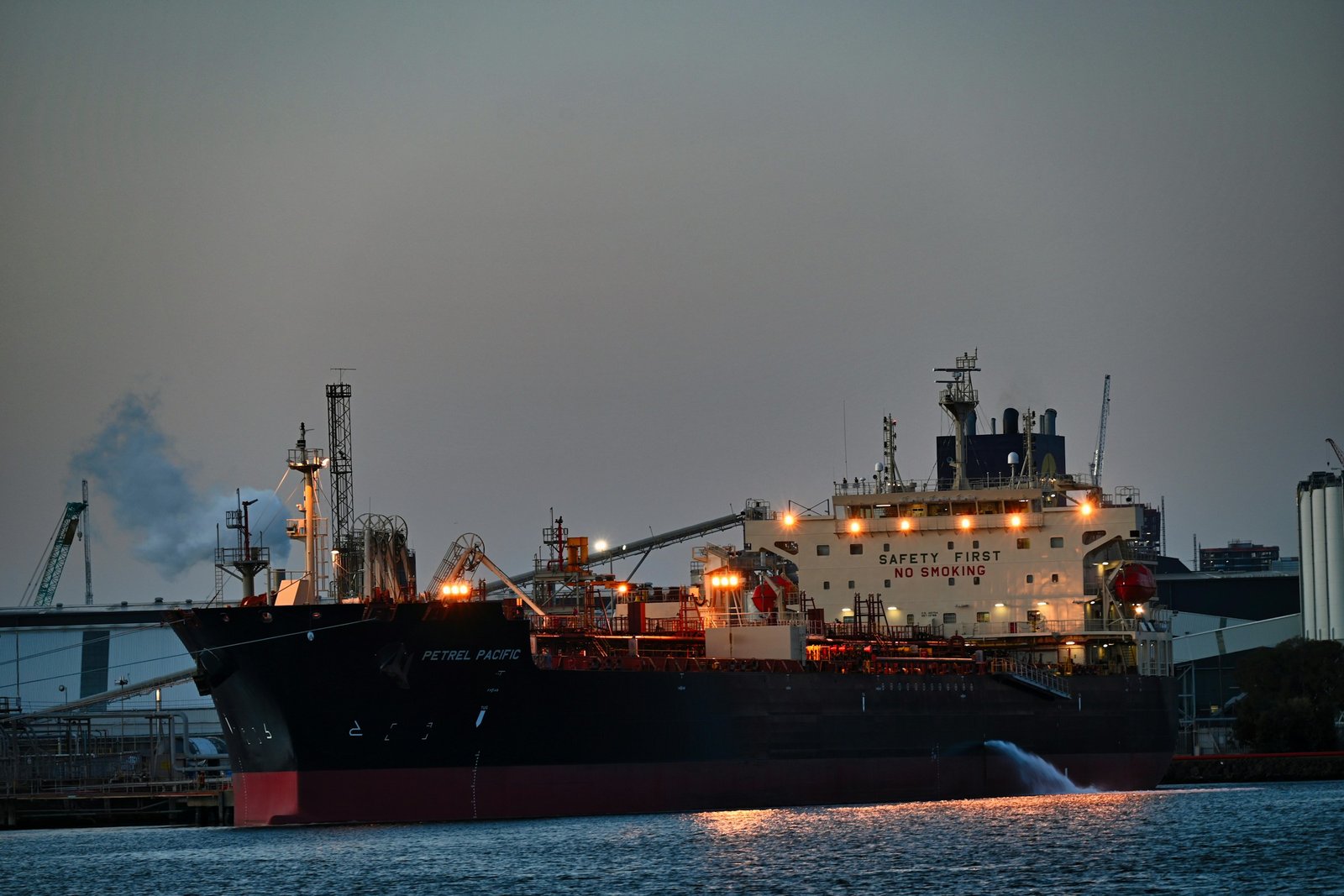
Diesel is among the most internationally traded refined products on earth, and the last several years have rewritten its trade map. Fleets that understand these dynamics negotiate from strength; those that do not simply absorb the consequences at the pump.
Specification fragmentation. Dozens of national diesel grades coexist globally. A cargo meeting EN 590 may miss density or cetane windows in parts of Latin America or Southeast Asia, forcing costly re-blending or discounting. Arbitrage flows shift toward whichever market pays best, and local availability tightens overnight.
Logistics chokepoints. Red Sea security diversions have added roughly 10 to 14 days of transit for vessels rerouted around the Cape of Good Hope, while drought-driven draft restrictions have periodically throttled Panama Canal transits. Every additional day at sea ties up working capital in floating inventory and increases demurrage exposure.
Restructured trade flows. Sanctions on Russian diesel exports since early 2023 forced European importers to rebuild supply lines from the US Gulf, Middle East, and India - lengthening voyage times and creating recurring regional premium spikes whenever Atlantic Basin runs dip.
Quality degradation in transit. Long voyages invite water ingress through breather systems, and water is the incubator for microbial growth at the fuel-water interface - the notorious "diesel bug" that produces sludge capable of clogging filters fleet-wide within weeks of delivery.
Institute a two-port testing protocol: a certified certificate of analysis at load port, plus an independent laboratory sample at discharge. For any cargo moving more than 20 days at sea, the second test is not optional - it is insurance.
Building the Procurement Stack: Contracts, Hedges, and Habits
Choose the Right Contract Architecture
The single biggest lever most fleets ignore is contract structure. Buying everything on the spot rack transfers 100 percent of price risk onto your P&L. Mature procurement programs layer multiple structures:
| Contract Structure | Pricing Mechanism | Best Suited For | Risk Posture |
|---|---|---|---|
| Spot / rack purchase | Posted terminal price at time of lifting | Small fleets, irregular demand | Fully exposed to short-term volatility |
| Fixed-price term contract | Locked rate over 3 to 12 months | Budget certainty, predictable routes | Protected from upside; forfeits downside gains |
| Index-linked supply | Published benchmark plus fixed differential (e.g., Platts 10 ppm cargo assessments) | Medium to large fleets with treasury oversight | Tracks market; margin locked via the differential |
| Collar / hybrid structure | Floor and ceiling built around a floating benchmark | Volatile markets, thin-margin operators | Exposure bounded in both directions |
Hedge What You Cannot Negotiate
ICE Gasoil futures in Europe and NYMEX ULSD futures in the United States allow fleets to lock forward coverage against physical purchases. A common discipline is hedging 50 to 70 percent of forecasted next-quarter volume, leaving room to capture favorable moves. Fleets without an in-house risk desk routinely outsource this overlay to their trading counterparty - a service a professional supplier builds into the relationship at little incremental cost.
Squeeze the Operational Details
Price discovery is only half the game. Consolidating volume across depots unlocks tiered pricing; aligning delivery cadence with real consumption cuts emergency-load premiums; auditing invoices against posted rack prices recovers systematic billing errors; and negotiating firm delivery windows eliminates demurrage surprises. None of these require market genius - they require follow-through.
Never let storage tanks fall below roughly 20 percent capacity. Low levels stir up settled sediment and water bottoms, sending decades of accumulated contamination straight into your newest fuel filter - and your injector warranty claim gets denied precisely when you need it most.
Quality Assurance and Seasonal Readiness
Verify Every Batch Against the Numbers That Matter
Your receiving checklist should reference specific test methods: sulfur by ultraviolet fluorescence (ASTM D5453), cetane by engine test or derived cetane index, flash point by ASTM D93, lubricity by HFRR, distillation profile by ASTM D86, and water and sediment by ASTM D2709. At the rack or yard, train drivers in two-minute field checks - the clear-and-bright visual inspection and a bottom-sample water check - before accepting any load into primary storage.
Win the Winter Before It Starts
Cold-flow performance is where unprepared fleets bleed money. As temperatures approach a fuel's cloud point, wax crystals form, clog filters, and strand vehicles. Plan seasonal transitions four to six weeks ahead of the first expected freeze: blend in kerosene-range components, deploy cold-flow improver additives, and confirm that winter-grade product actually matches the cloud point printed on its documentation. Northern operations should treat the autumn spec changeover as a hard deadline, not a suggestion.
The RK Petro Advantage
Navigating this landscape alone means maintaining relationships with refineries, shipowners, laboratories, terminals, and futures brokers - simultaneously, across time zones. RK Petro compresses that entire apparatus into a single accountable counterparty.
Our trading desk maintains direct supply relationships spanning the US Gulf Coast, Northwest Europe's ARA hub, the Middle East Gulf, and the Asia-Pacific refining complex. We orchestrate vessel, barge, rail, and truck logistics end to end, enforce two-port quality verification on every cargo, and engineer contract structures - fixed, index-linked, or collared - around your actual consumption profile rather than our sales targets.
Key Takeaways
- Fuel represents 30 to 40 percent of fleet operating cost - procurement discipline is profit engineering, not administration.
- Know your specification cold: sulfur limits, cetane, density, and lubricity determine both compliance and component life.
- ULSD is manufactured under severe hydrotreating conditions; its quality must be verified at load and discharge, never assumed.
- Layer your contract structures - spot flexibility, term coverage, index linkage, and hedges - to bound risk without surrendering opportunity.
- Operational habits matter: tank minimums, invoice audits, seasonal changeovers, and field inspections protect everything the contracts achieve.
The fleets winning in today's diesel market are not guessing better than their competitors - they are structuring better. With the right product knowledge, the right contract architecture, and the right trading partner, ultra-low sulfur diesel stops being a volatile expense you endure and becomes a managed input you command.


Discussion (0)
Comments are moderated — they appear after a quick review by our team.
Leave a Comment